Source eco friendly breathable hooded thermal jacket for Hiking, Work, Daily Wear
Compare 30 listings of eco friendly breathable hooded thermal jacket options from verified suppliers. Buyers can evaluate features like windproofing, waterproof ratings, and customization services for winter outdoor activities; compare the available evidence and request quotations based on your requirements.
Key considerations
Products List
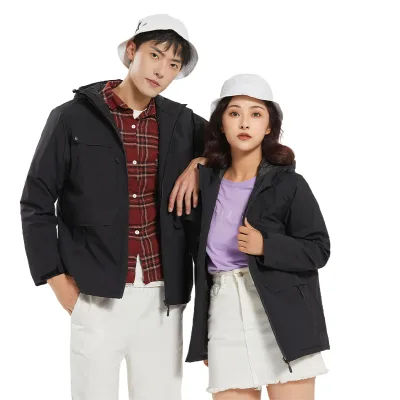


Comprehensive Sourcing Guide
Eco Friendly Breathable Hooded Thermal Jacket Sourcing Guide
Procurement teams must first distinguish between generic thermal outerwear and verified eco-friendly breathable options, as the supplied data reveals a mix of standard polyester soft shells and specialized windproof variants. While the catalog lists "WINDSTOPPER SOFTSHELL" technology with a 10,000mm waterproof rating, buyers must verify if the specific "100% Polyester" shell material meets their sustainability criteria, as standard polyester is not inherently eco-friendly without specific recycled content certifications. The presence of "Heat-Transfer Printing" and "Quilting" techniques suggests a focus on aesthetic customization rather than material innovation, requiring careful scrutiny of the supply chain to ensure the "Eco Friendly" claim is substantiated by actual recycled fiber usage or low-impact dyeing processes.
Buyers should also note the diverse product range spanning from "Quilted Jacket" styles to "Safari Jacket" designs, which complicates the definition of a unified thermal product line. The observed "Winter" seasonality and "Unisex" or gender-specific "Hoody" styles indicate a broad market application, yet the "Glass" material listed for a specific model with high refractoriness suggests a potential data entry error or a distinct industrial component unrelated to wearable apparel. This inconsistency necessitates a rigorous initial screening process where procurement specialists must isolate genuine textile products from unrelated industrial listings to ensure the final selection aligns with the core requirement for a breathable, hooded thermal garment suitable for outdoor or casual wear.
Product Scope and Observed Listing Signals
The observed product scope indicates a strong emphasis on functional performance features such as "Windproof," "Waterproof," and "Breathable" capabilities, which are critical for thermal jackets intended for cold weather conditions. The listing explicitly supports "Oem Service" and "Customization," allowing buyers to tailor the "Quilted Jacket" or "Soft Shell Jacket" designs to specific brand requirements while maintaining the core thermal properties. However, the "Pattern Type" is listed as "Others" and "Quilted Jacket," suggesting that while the construction method is standardized, the visual design may vary significantly, requiring buyers to request physical samples to confirm that the aesthetic customization does not compromise the thermal insulation or breathability of the garment.
Commercial signals reveal a wide price range from 0.5 to 700 USD and an MOQ range of 2 to 1000 units, reflecting a market that accommodates both small-batch prototyping and large-scale production runs. The "Available Quantity" of 500 units for specific models suggests potential inventory constraints for immediate fulfillment, making it essential for buyers to confirm real-time stock levels before committing to orders. Furthermore, the "7 days sample order lead time" support is a positive indicator for rapid prototyping, yet the "Single gross weight" of 2.000 kg per item highlights significant shipping costs that must be factored into the total landed cost calculation, especially for international procurement from the "Hebei, China" origin.
Technical Specifications to Verify
Verification of the "Material Technology" is paramount, as the listing cites "WINDSTOPPER SOFTSHELL" and "Waterproof 10,000mm" alongside a generic "100% Polyester" shell. Buyers must demand third-party test reports confirming that the waterproof rating is achieved through a durable membrane rather than a temporary coating, which can degrade after washing. The "Fabric Type" is identified as "Soft Shell," which typically offers a balance of stretch and weather resistance, but the presence of "Polyester/Cotton" blends in other listings requires clarification to ensure the final product maintains the necessary thermal retention and moisture-wicking properties expected of a high-performance thermal jacket.
The "Seamless Fusing" feature is a critical technical specification that directly impacts the jacket's durability and weather resistance by eliminating needle holes that could allow water ingress. Buyers should verify the integrity of the "Zipper" closure and the "Removable Liner" attachment points, as these are common failure points in thermal outerwear. Additionally, the "Heat Insulation" feature listed for specific models must be correlated with the "Quilting" technique to ensure the insulation layer is evenly distributed and does not shift during wear, which would create cold spots and reduce the overall thermal efficiency of the garment.
Compliance and Safety Documentation
While the product listing mentions "Anti-Foul" and "Anti-Static" features, it does not explicitly state compliance with major international safety standards such as REACH or Oeko-Tex for chemical safety. Buyers must request documentation proving that the "Heat-Transfer Printing" inks and the "Polyester" fibers used in the "Soft Shell" fabric are free from harmful substances like azo dyes or formaldehyde, particularly since the product is intended for "Adults" and potentially "Women" or "Men" in close contact with the skin. The absence of specific certification data in the provided facts necessitates a proactive inquiry to the supplier regarding their chemical compliance protocols and any third-party testing they have conducted on their finished goods.
Safety documentation must also address the "Refractoriness" of 200-450°C listed for a specific item, which appears to be an industrial component rather than a wearable jacket. This discrepancy highlights the risk of sourcing from mixed catalogs where non-apparel items are inadvertently listed alongside textile products. Procurement teams must ensure that all documentation pertains strictly to the wearable apparel, verifying that the "Glass" material and high-temperature specifications do not indicate a confusion in the product description that could lead to the delivery of non-compliant or dangerous items. Clear separation of product categories in the supplier's documentation is essential to avoid regulatory violations and safety hazards.
Cost Drivers and Commercial Terms
The cost structure for these jackets is heavily influenced by the "WINDSTOPPER SOFTSHELL" technology and the "Quilting" technique, both of which add manufacturing complexity and material costs compared to standard fleece or woven jackets. The "Single package size" of 30X20X10 cm and the "2.000 kg" gross weight per unit significantly impact logistics expenses, particularly for air freight or consolidated sea shipments. Buyers should negotiate based on the "Selling Units" of single items versus bulk packs, as the "1 PCS/Polybag" packing method may increase packaging waste and costs, offering an opportunity to optimize packaging for sustainability and cost reduction.
Commercial terms must account for the "7 days sample order lead time" and the potential variability in production lead times for custom orders. The "Oem Service" availability allows for branding and design changes, but these customizations often incur additional setup costs and extended lead times that must be clearly defined in the purchase agreement. Buyers should also consider the "Available Quantity" of 500 units as a baseline for inventory planning, ensuring that the supplier can scale production to meet demand without compromising quality or delivery schedules, especially given the diverse size range from S to 5 XL and the multiple color options available.
Supplier Qualification and Quality Control
Supplier qualification should focus on their ability to consistently deliver "Oem Service" with the specific "Quilting" and "Seamless Fusing" techniques required for high-performance thermal jackets. Buyers must verify the supplier's quality control processes for the "Zipper" closure and "Removable Liner" attachments, as these are critical functional elements that can fail under stress. The "Hebei, China" origin suggests a manufacturing hub with established textile capabilities, but buyers should conduct on-site audits or request detailed quality assurance reports to ensure that the "Windproof" and "Waterproof" claims are met consistently across all production batches.
Quality control protocols must include rigorous testing of the "Breathable" and "Water Resistant" features to ensure they meet the specified performance standards. The "Heat-Transfer Printing" method used for customization should be tested for colorfastness and adhesion to prevent peeling or fading after washing. Buyers should establish clear acceptance criteria for the "Soft Shell" fabric, ensuring that the "Polyester" content and any "Polyester/Cotton" blends maintain their structural integrity and thermal properties. Regular third-party inspections during production and pre-shipment are recommended to mitigate the risk of receiving substandard goods that do not meet the buyer's specifications.
Long-Term Procurement Checks
Long-term procurement strategies should prioritize building a relationship with suppliers who can consistently meet the "Eco Friendly" and "Breathable" requirements while maintaining the high performance of the "WINDSTOPPER SOFTSHELL" technology. Buyers should implement a system for tracking supplier performance metrics, including on-time delivery, defect rates, and responsiveness to customization requests. The "Customization" availability offers a competitive advantage, but it requires ongoing communication to ensure that design changes do not negatively impact the product's thermal efficiency or durability over time.
Sustainability checks must evolve beyond initial material verification to include ongoing assessments of the supplier's environmental practices and supply chain transparency. Buyers should request regular updates on the sourcing of raw materials, particularly the "100% Polyester" and any recycled content, to ensure alignment with corporate sustainability goals. The "Winter" seasonality of the product means that demand fluctuations can impact production schedules, so maintaining a flexible supply chain with multiple qualified suppliers is essential to mitigate risks and ensure a steady supply of high-quality thermal jackets for the market.
FAQs
What materials are used for the shell and lining?
The shell is made of 100% polyester with Windstopper softshell technology for waterproofing. Some variants use a polyester and cotton blend. The fabric is designed to be breathable and windproof, ensuring comfort in winter conditions while maintaining durability for outdoor activities.
Can I customize the jacket with my own logo?
Yes, OEM service is available for customization. You can use heat-transfer printing to add your logo or specific designs. This allows brands to create unique apparel that aligns with their identity while maintaining the high-quality construction and functional features of the jacket.
What sizes are available for this jacket?
Sizes range from Small to 5XL, accommodating various body types. The product supports plus-size options and unisex styling. This extensive size range ensures that both men and women can find a comfortable fit, making it suitable for diverse customer bases and bulk orders.
How long does sample production take?
Sample orders are supported with a lead time of seven days. This quick turnaround allows buyers to evaluate quality, fit, and customization options before committing to larger production runs. It facilitates efficient decision-making and reduces the overall time required to finalize product specifications.
What are the key features of the jacket?
Key features include windproof, waterproof, and breathable properties. It is also lightweight, quick-drying, and anti-foul. The jacket may include a removable liner and quilted construction. These attributes make it ideal for winter wear, providing protection against harsh weather while ensuring wearer comfort.
Where is this jacket manufactured?
The jacket is manufactured in Hebei, China. This location is a known hub for textile and apparel production. Buyers can leverage this origin for sourcing logistics, considering the established supply chain infrastructure and the availability of skilled labor for high-quality garment manufacturing.